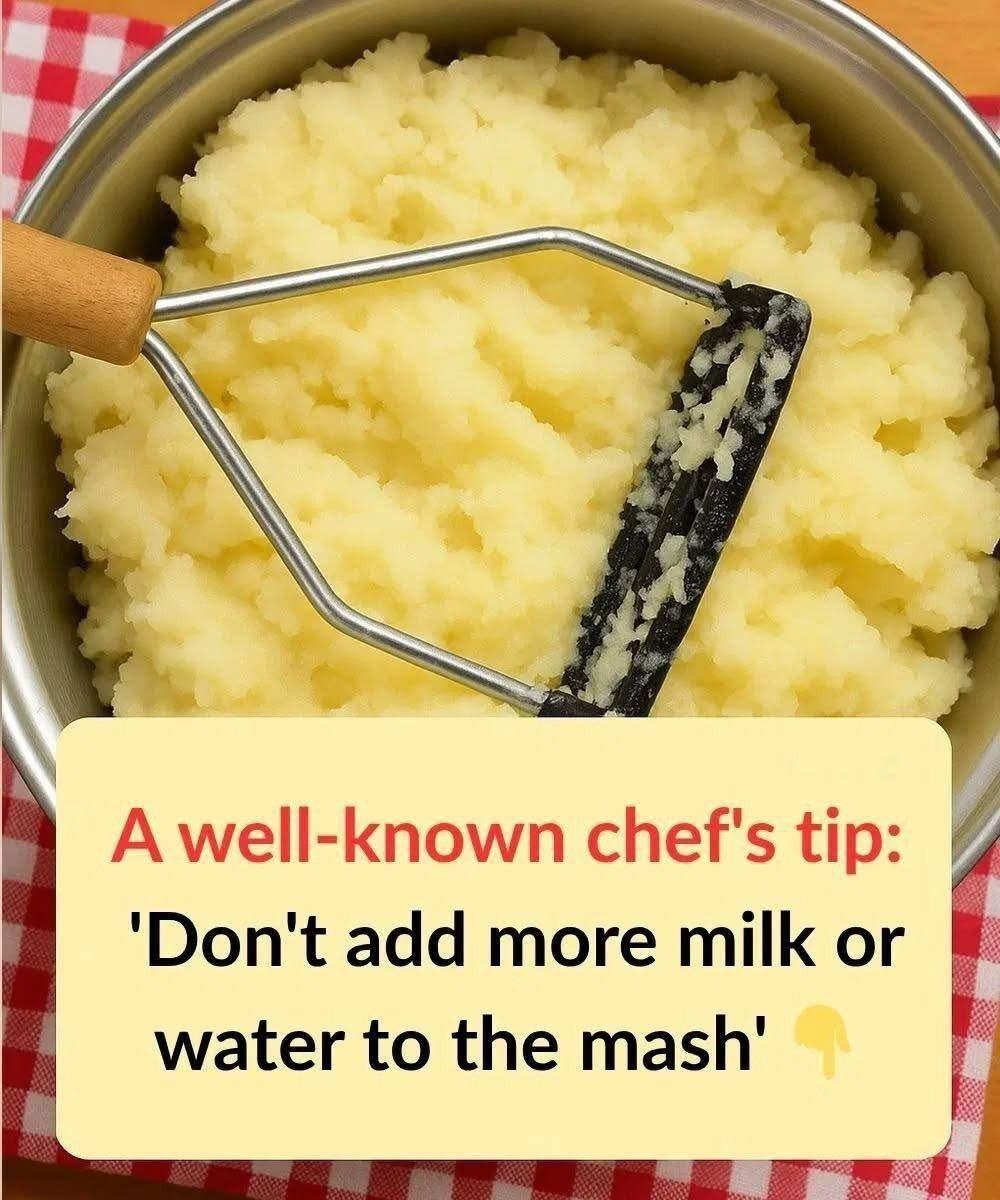
The Right Way: Chef-Approved Method (Step-by-Step)
Follow this method for silky, rich, never-gummy mashed potatoes—every single time.
Step 1: Choose the Right Potato
Use floury, high-starch potatoes like:
Russet
Yukon Gold
Maris Piper
They break down easily and absorb butter beautifully.
Step 2: Cut & Boil Properly
Peel and cut into even chunks (~1.5 inches) for uniform cooking.
Place in cold, salted water (yes, cold!).
Bring to a gentle boil, then simmer 15–20 minutes until fork-tender.
Don’t overcook—mushy potatoes start here.
Step 3: Drain & Dry
Drain thoroughly in a colander.
Return to the empty pot and place over low heat for 1–2 minutes, stirring gently.
This evaporates excess moisture—the #1 secret to avoiding watery mash.
Step 4: Warm Your Dairy
Heat milk or cream (½ cup per pound of potatoes) with butter until steaming—not boiling.
Pro tip: Use whole milk, half-and-half, or heavy cream for richness.
Step 5: Mash Gently
Transfer potatoes to a large bowl.
Use a potato ricer or food mill (best), or a hand masher (okay).
Never use a blender or food processor—they overwork the starch → glue city.
Step 6: Mix in Warm Dairy Gradually
Slowly pour warm milk-butter mixture into the potatoes.
Fold gently with a spatula or wooden spoon until smooth.
Key: Add liquid before seasoning fully. You can always adjust salt later.
Step 7: Season & Serve
Stir in salt, white pepper, and optional extras (chives, roasted garlic, nutmeg).
Taste. Adjust. Serve immediately.
No reheating or sitting—mashed potatoes cool fast and stiffen.
What to Do If Your Mash Is Too Thick (Without Breaking the Rule)
If your potatoes are dense or dry—don’t panic. Don’t add cold milk.
Instead:
Warm more butter or cream and fold in slowly.
Pass through a ricer again—this adds air and softness.
Add a spoonful of sour cream or cream cheese—adds richness without thinning.
These fix texture without activating excess starch.
Pro Tips from the Pros
Rice, don’t mash: A ricer gives the lightest texture—no lumps, no glue
Butter temperature matters: Warm butter blends smoother than cold
Warm dairy only: Cold milk cools potatoes and ruins emulsion
Season in layers: Salt the water and the final mix
Make ahead? Reheat gently with milk in a double boiler—never microwave
When to Serve These Golden Gems
Thanksgiving (non-negotiable!)
Weeknight comfort with gravy
Dinner parties where you want to impress
To someone who says, “I don’t eat sides” —watch them ask for seconds
Because once they taste that buttery, fluffy, perfectly seasoned perfection?
They’ll be converted.
Final Thought: Great Food Isn’t About Adding More—It’s About Doing It Right
You don’t need 17 ingredients to make something magical.
Sometimes, all it takes is:
A potato
A stick of butter
And the courage to follow the rules
And when your partner says, “Did you get this from a restaurant?”
Or your kid licks the bowl clean…
You’ll know:
You didn’t just make mashed potatoes.
You made art.
