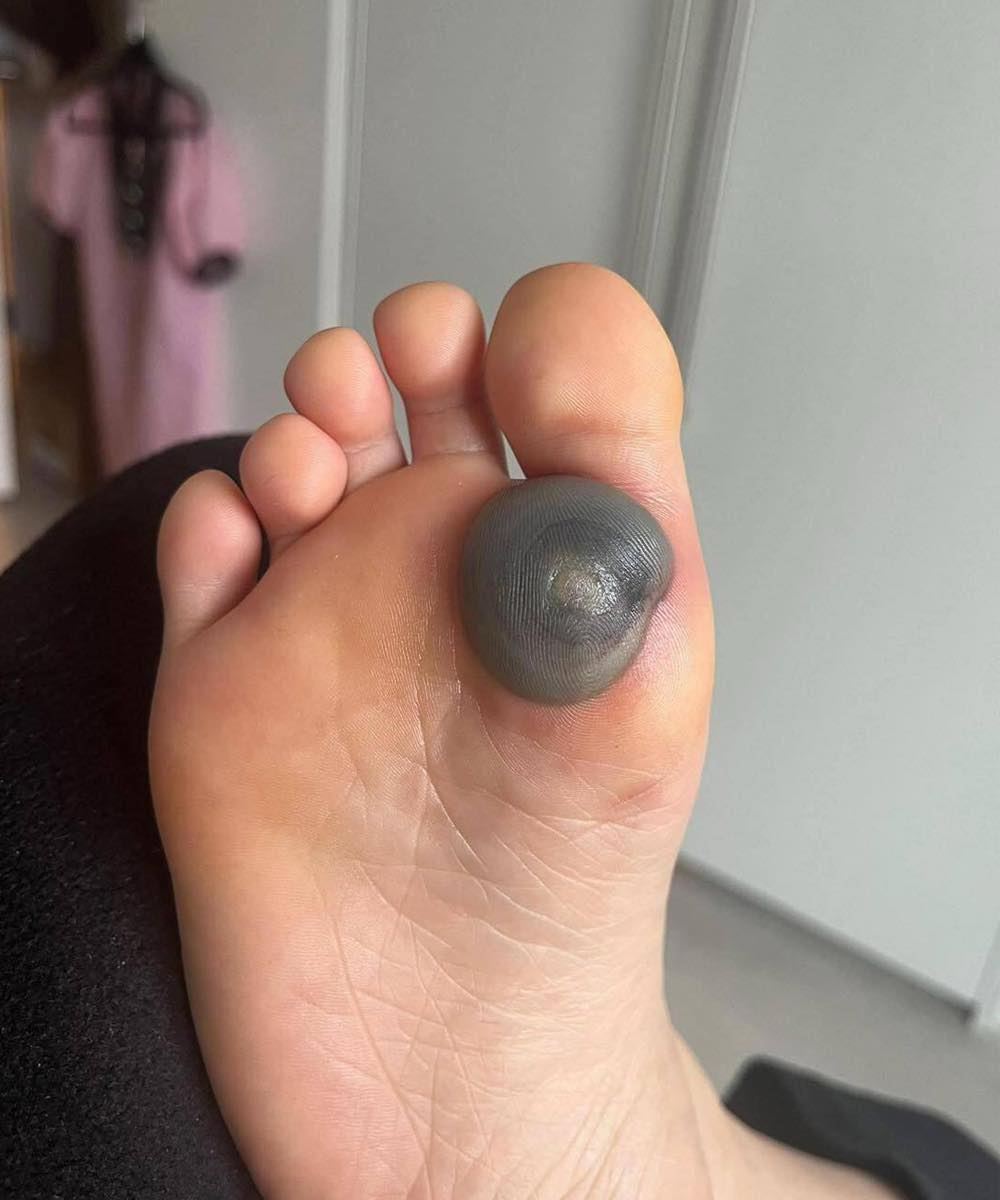
In almost all cases, no.
The skin covering a blood blister acts as a natural protective barrier. Popping it increases the risk of infection and can slow healing, especially on the foot where bacteria are more common.
If a blood blister breaks on its own:
Gently wash the area with mild soap and water
Apply a clean, non-irritating antiseptic
Cover with a sterile bandage
Keep the area clean and dry
Do not remove the loose skin unless instructed by a healthcare professional.
How to Care for a Blood Blister at Home
If the blister is intact and there are no warning signs, supportive care is usually enough.
Helpful steps include:
Reducing pressure on the foot
Using well-fitting, cushioned footwear
Applying a cool compress for short periods
Keeping the area clean and covered if needed
Encouraging rest until walking is comfortable
Avoid home remedies that involve puncturing the skin or applying harsh substances.
When Pain Signals You Should Seek Medical Advice
While blood blisters are usually harmless, some situations require professional evaluation — especially in children.
Contact a healthcare provider if:
The pain is severe or worsening
Your child cannot move or bear weight on the foot
The area becomes very warm, red, or swollen
There is fluid leakage, pus, or an unusual odor
Fever develops
The blister grows rapidly or changes appearance
Healing does not improve after two weeks
Children cannot always describe what they feel clearly, so changes in behavior, refusal to walk, or increasing distress are important clues.
