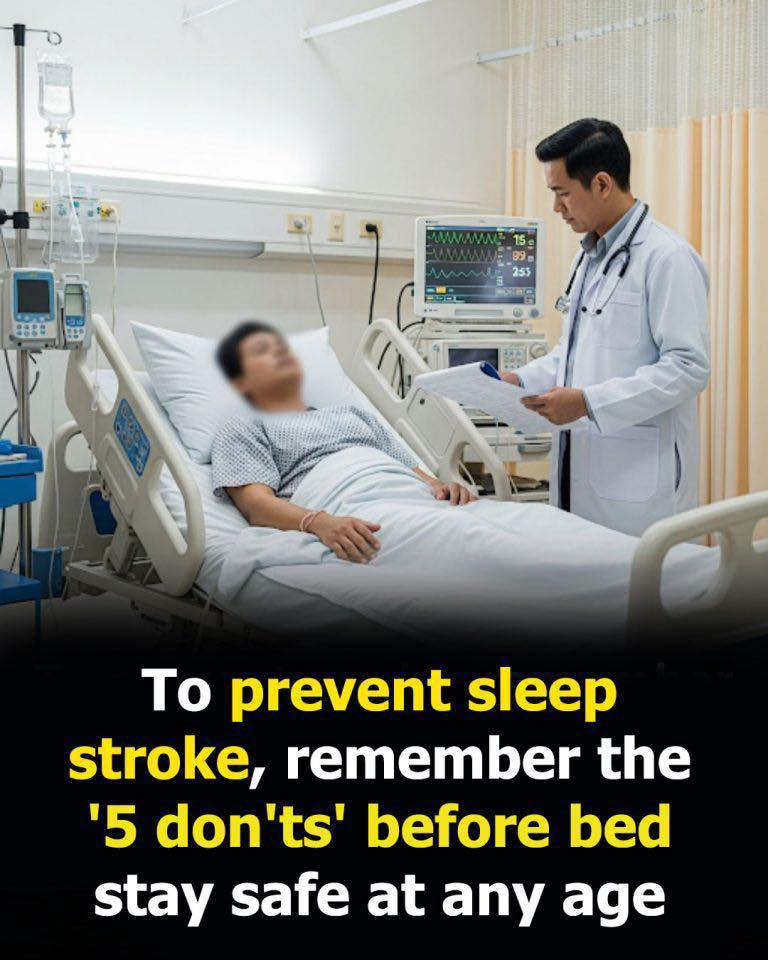
If you wake up feeling “off” or notice sudden changes, it’s crucial to recognize the warning signs. Symptoms may include:
- Numbness or paralysis on one side of the body (arm, leg, or face)
- Slurred speech or difficulty forming words
- Trouble understanding what others are saying
- Confusion or sudden disorientation
- Blurred, blackened, or double vision
- Sudden trouble walking or loss of balance
- A severe, unexplained headache
- Nausea, vomiting, or dizziness
- Seizures or loss of consciousness
Doctors also recommend remembering the FAST test:
- F – Face drooping
- A – Arm weakness
- S – Speech difficulty
- T – Time to call emergency services immediately
Even if symptoms appear mild, don’t ignore them—early treatment saves lives and prevents long-term disability.
Why Nighttime Habits Matter
During sleep, your body’s systems slow down. Blood pressure typically dips, blood sugar stabilizes, and your cardiovascular system gets a chance to reset. But unhealthy evening habits—like late heavy meals, alcohol, or unresolved stress—can keep your system on high alert. Over time, this increases your risk for dangerous nighttime events like sleep strokes.
