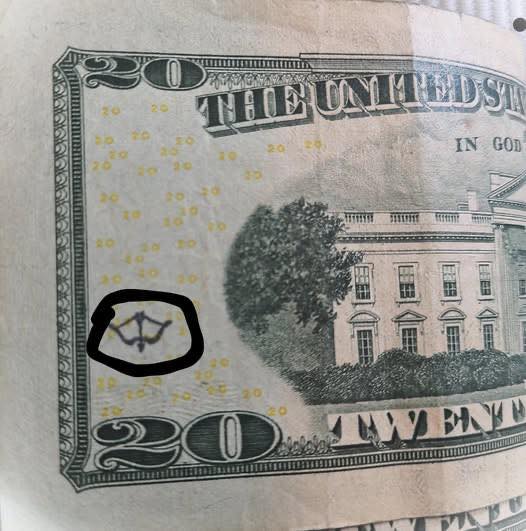
Chop marks don’t follow a universal design. They vary widely depending on who applied them and where.
Some look like arrows, triangles, or abstract shapes.
Others include initials, numbers, or symbols from local writing systems.
Some are bold and dark. Others are faint and almost invisible unless you look closely.
Most are placed in areas that don’t interfere with important features of the bill, such as portraits or serial numbers. Experienced currency handlers know where to stamp without making the bill unusable.
To the untrained eye, these marks may look messy or strange. To those who understand them, they’re meaningful signals.
Practical Benefits in Everyday Trade
In modern markets where chop marks are common, they serve several practical purposes.
First, they reduce disputes. If a bill already carries marks from respected traders, fewer questions are asked. Transactions move faster.
Second, they build confidence in cash-based economies. When people rely on physical money rather than digital systems, trust must be visible.
Third, they help compensate for limited technology. Not every market has access to counterfeit-detection machines. Human inspection, followed by a mark, becomes the safeguard.
Have you ever taken a closer look at a dollar bill and noticed something that didn’t quite belong? A small arrow-like stamp. A dark ink mark in the corner. A faint symbol pressed into the paper as if someone had signed it without a pen.
At first glance, these markings can feel unsettling. Many people assume the bill has been damaged, defaced, or tampered with. Some even worry it might be counterfeit or no longer valid. But in reality, these small symbols often tell a fascinating and deeply human story—one that stretches across continents, cultures, and centuries.
These markings are commonly known as chop marks, and far from being random, they represent trust, verification, and survival in parts of the world where cash still reigns supreme.
What Are Chop Marks, Really?
Chop marks are small inked stamps or symbols applied to paper currency by money changers, merchants, traders, or currency handlers. Their purpose is simple but vital: to confirm that a bill has been examined and accepted as genuine.
In places where electronic verification tools are scarce or unreliable, human judgment still matters. A chop mark is a quiet declaration that someone with experience has already checked the bill and found it trustworthy.
Each mark acts like a signature, though not of ownership—but of confidence.
When another merchant later receives the same bill, the mark reassures them that the currency has already passed through knowledgeable hands. In this way, a single bill becomes part of a silent conversation among strangers who may not share a language, culture, or legal system—but who still need to exchange value safely.
