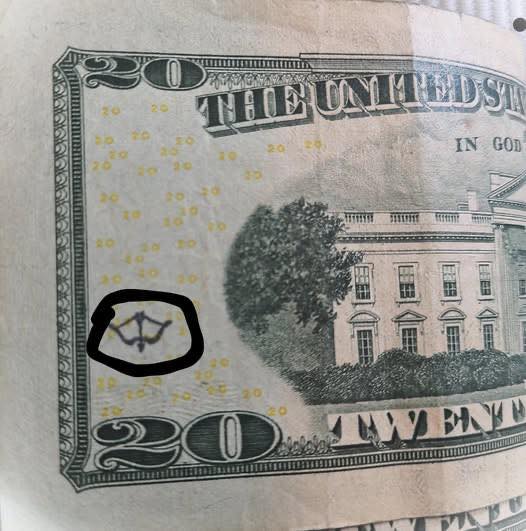
In modern markets where chop marks are common, they serve several practical purposes.
First, they reduce disputes. If a bill already carries marks from respected traders, fewer questions are asked. Transactions move faster.
Second, they build confidence in cash-based economies. When people rely on physical money rather than digital systems, trust must be visible.
Third, they help compensate for limited technology. Not every market has access to counterfeit-detection machines. Human inspection, followed by a mark, becomes the safeguard.
Ironically, in these environments, a bill with multiple chop marks may be considered safer than a perfectly clean one. Clean bills raise suspicion. Marked bills tell a story of survival.Ironically, in these environments, a bill with multiple chop marks may be considered safer than a perfectly clean one. Clean bills raise suspicion. Marked bills tell a story of survival.
Are Marked Bills Still Legal in the United States?
This is a common concern, especially among Americans who encounter a stamped bill for the first time.
In most cases, lightly marked U.S. dollar bills are still legal tender. They can be spent, deposited, or exchanged without issue.
However, heavily marked, torn, or damaged bills may be rejected by vending machines, automated counters, or banks that rely on strict standards.
That said, rejection by a machine doesn’t mean the bill has lost its value. Banks can often exchange damaged currency, and marked bills frequently continue circulating in local markets where personal trust outweighs mechanical approval.
Why Collectors and Historians Love Chop Marks
To collectors, chop-marked bills are far more than damaged currency.
They are artifacts.
Each stamp adds a layer of history. The shape, ink color, and placement can sometimes reveal where the bill traveled and who may have used it. A bill stamped in Southeast Asia may look very different from one marked in West Africa or Central America.
For historians, these marks offer tangible proof of global trade patterns, migration, and economic adaptation. They show how money connects people across borders long before digital systems existed.
For everyday people, they serve as a reminder that money isn’t just paper. It’s a witness.
